Tires
Attitudes are like tires…You have to change them if you want to go forward
Attitudes are like tires…You have to change them if you want to go forward

“Before you speak, listen.
Before you write, think.
Before you spend, earn.
Before you invest, investigate.
Before you criticize, wait.
Before you pray, forgive.
Before you quit, try.
Before you retire, save.
Before you die, give.”
~William Arthur Ward
Have a beautiful day!



| EMPLOYEE NAME | POSITION | BIRTHDATE |
| SCOTT PASCOE | PARTS COUNTERMAN | 4-1 |
| ORLANDO IGLESIAS | SALES TRAINER | 4-1 |
| NIEL RODRIGUEZ | KIA SERVICE TECH | 4-1 |
| JAZ GRBIC | PARTS COUNTERMAN | 4-3 |
| EHTAN DYMOND | NORTH SERVICE TECH | 4-4 |
| GREG GRADY | NORTH SERVICE TECH | 4-5 |
| JAY ROMAN | SOUTH SIDE WASH | 4-5 |
| RUSSELL MINX | BODY SHOP | 4-6 |
| DEBORAH PULLINS | VAN DRIVER | 4-8 |
| JOSHUA STEPHENS | KIA SERVICE TECH | 4-9 |
| LAURA MENDOZA | ASSISTANT TO MIKE GREENHOW | 4-10 |
| COLE PIERCE | NORTH P/O SALES | 4-12 |
| JASON BARRETT | CHEVROLET SERVICE TECH | 4-14 |
| LONNIE ANDERSON | SOUTH DETAIL TECH | 4-18 |
| JANNI RIVERA | HR | 4-19 |
| GREG SCHMIDT | KIA SALES | 4-20 |
| SAL, JR | PRESIDENT | 4-20 |
| PEDRO MENDEZ | SOUTH DETAIL WASH | 4-22 |
| ZAQ BERRIDGE | CHEVROLET SALES MANAGER | 4-22 |
| DAVID SCHULTZ | HONDA SALES | 4-23 |
| SONNY GLOVER | GENERAL MANAGER | 4-24 |
| DOUG MAYNARD | NORTH P/O SALES | 4-24 |
| ALEXANDER FIGUEROA | KIA SERVICE TECH | 4-24 |
| SRECKO BOKUN | FINANCE CLOSER | 4-24 |
| LIBORIO ACEVEDO | SOUTH DETAIL TECH | 4-27 |
| ANDRE BETANCES | HONDA SALES | 4-28 |
| RICHARD MURRAY | DEALER TRADE DRIVER | 4-29 |

Kosher salt
12 ounces linguine
1 1/4 pounds large shrimp, peeled and deveined
1/3 cup extra-virgin olive oil
5 cloves garlic, minced
1/4 to 1/2 teaspoon red pepper flakes
1/3 cup dry white wine
Juice of 1/2 lemon, plus wedges for serving
4 tablespoons unsalted butter, cut into pieces
1/4 cup finely chopped fresh parsley
Directions
“Pray, then, in this way…” – Matthew 6:9a
Jesus’ disciples would often see Him go off on His own to pray.
Curious to learn more, they asked Him to teach them how to pray. Now, there’s no real mystery to praying – after all, you’re just talking to your Heavenly Father – it should be like talking to your best friend.
But Jesus knew His disciples needed help, as we often do, so here is a summary of the conversation that followed:
Jesus taught the basics of prayer, but prayer doesn’t end there. Whatever else you need to talk about with God, go ahead and tell Him. He wants to hear from you.
Find a quiet spot and give it a try.
And, remember, your prayer life gets better with practice.


What do dentists call their x-rays?
Tooth pics!
Did you hear about the first restaurant to open on the moon?
It had great food, but no atmosphere.
What did one ocean say to the other ocean?
Nothing, it just waved.
Do you want to hear a construction joke?
Sorry, I’m still working on it.
Why do ducks have feathers?
To cover their butt quacks!
Why did the bullet end up losing his job?
He got fired.
What does a house wear?
Address!
Why is Peter Pan always flying?
Because he Neverlands. (I love this joke because it never grows old.)
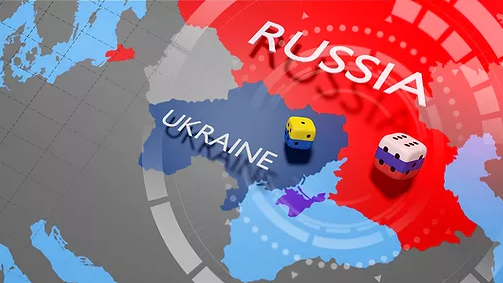
The Russian invasion of Ukraine will likely lead to a significant increase in global cybercrime.
A potent new form of malware has already emerged since the initial attack began. Companies and consumers in the U.S. should be on alert for an increase in the number of phishing emails that contain dangerous malware.
We’ve seen the pattern before: in the past two years, cybercrime goes up when high-profile news stories break. Phishing emails, ransomware, and financial scams targeting U.S. companies and individuals grew significantly during COVID outbreaks, the creation of fiscal stimulus packages, and election controversies. There are already signs that cybercrime linked to the conflict in Ukraine will spread globally.
> McAfee says phishing emails related to the Ukraine attack will be particularly effective. Scammers can easily create highly topical fake emails, and payoffs are large because readers are aware and curious about the topic.
> ZDNet says this week’s major attacks on the power grid, banking, and other Ukrainian infrastructure, are seen as a “large-scale test” for use later against targets around the world.
> Already a growing threat to companies, ransomware is evolving quickly. Today, British newspaper The Guardian says a newly discovered type of ransomware attacks firewalls, bypassing traditional methods of cyber protection. To distribute the new malware, criminals use emails with compelling subject lines designed to get recipients to download and open attachments.
> MIT says, because it’s impossible to localize a cyber-attack, the impact on Ukraine will quickly grow across the globe. In 2017, Russian malware called Petya and WannaCry, targeted at Ukraine, caused $10 billion in damages in the US, according to the Department of Homeland Security, making it the most expensive cyberattack in history.
> Disinformation campaigns are ramping up. Barron’s reports social media posts in Eastern Europe showing doctored photos and videos attributed to credible news sources, along with a spike in anti-Western content, are growing.

***Slow down when going through your emails and texts. Be suspicious of emails that are urgent or compelling.
***Trust your gut. Does a message seem odd, even if it’s from someone you know well? Be suspicious.
***Don’t open attachments unless you know the sender and you’re expecting the document.
***If you receive an email or text asking you to provide or change personal information, send money, or log in to an account, call the sender directly using the phone number you have (not the one in the email) to confirm the message is genuine.

 Regal Beagle Online